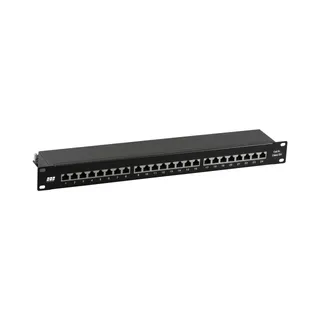
Patch Panels
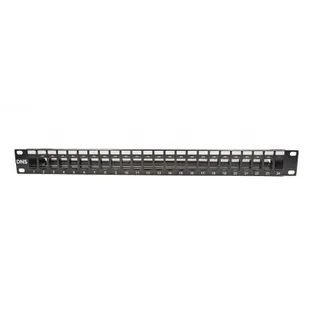
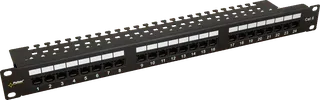
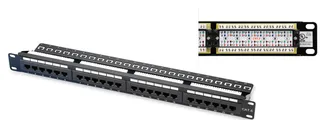
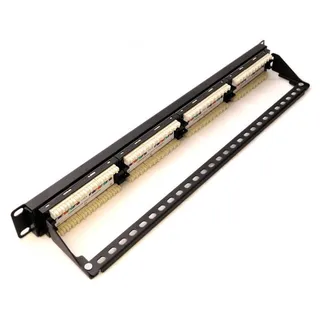
A patch panel is the point where permanent cabling ends and flexible patching begins. Instead of running every wall socket straight into a switch, each cable is terminated on the panel and short patch leads connect onward from there. The result is a rack you can rearrange without ever touching a cable buried in a wall or ceiling. For a camera installation this matters more than it first appears. PoE cameras are usually cabled once and then left alone for years. When a switch port fails, when you add a recorder, or when you move a camera to a different VLAN, you want to move a patch lead – not re-terminate a run above a suspended ceiling. Choose by category and shielding. CAT5E panels still carry 100 Mbit and PoE comfortably for standard cameras. CAT6 is the sensible default for new installations. CAT6A with STP shielding earns its place where cable runs share trunking with mains power, or where multi-gigabit uplinks are planned. Panels are sold loaded, with keystone modules already fitted, or empty so you can populate them with the module type your cabling calls for. Twenty-four ports in a single rack unit is the common size and fits most small and mid-sized sites. Related ranges: <a href="https://cameraworld.eu/product-category/network-equipment/server-rack-equipment/" rel="nofollow noopener" target="_blank">server and rack equipment</a>, <a href="https://cameraworld.eu/product-category/network-equipment/" rel="nofollow noopener" target="_blank">network equipment</a> and <a href="https://cameraworld.eu/product-category/poe-cameras/" rel="nofollow noopener" target="_blank">PoE cameras</a>.