Buying Guides · updated 2026-10-16
Storage for Security Cameras: microSD, NVR or Cloud
A security camera only solves half the problem. The other half is where the footage goes, and that choice decides whether you actually have evidence three weeks later or just a nice live view. There are three practical options, and most real installations end up using two of them together.
A memory card inside the camera
The simplest option: a microSD card slots into the camera and records locally. Nothing else to buy, nothing else to power, and recording continues even if your internet drops. That last point matters more than people expect — someone who cuts the router does not stop a card recording.
The limits are physical. Cards are small, so retention is short: a camera writing continuously will loop over a card in days rather than weeks. Cards also wear out, because surveillance recording is a constant write cycle and an ordinary phone card fails far sooner than one built for continuous video. And if the camera itself is taken, the recording goes with it.
Best for single cameras, sheds and garages, holiday houses — anywhere a recorder would be overkill.
An NVR or DVR
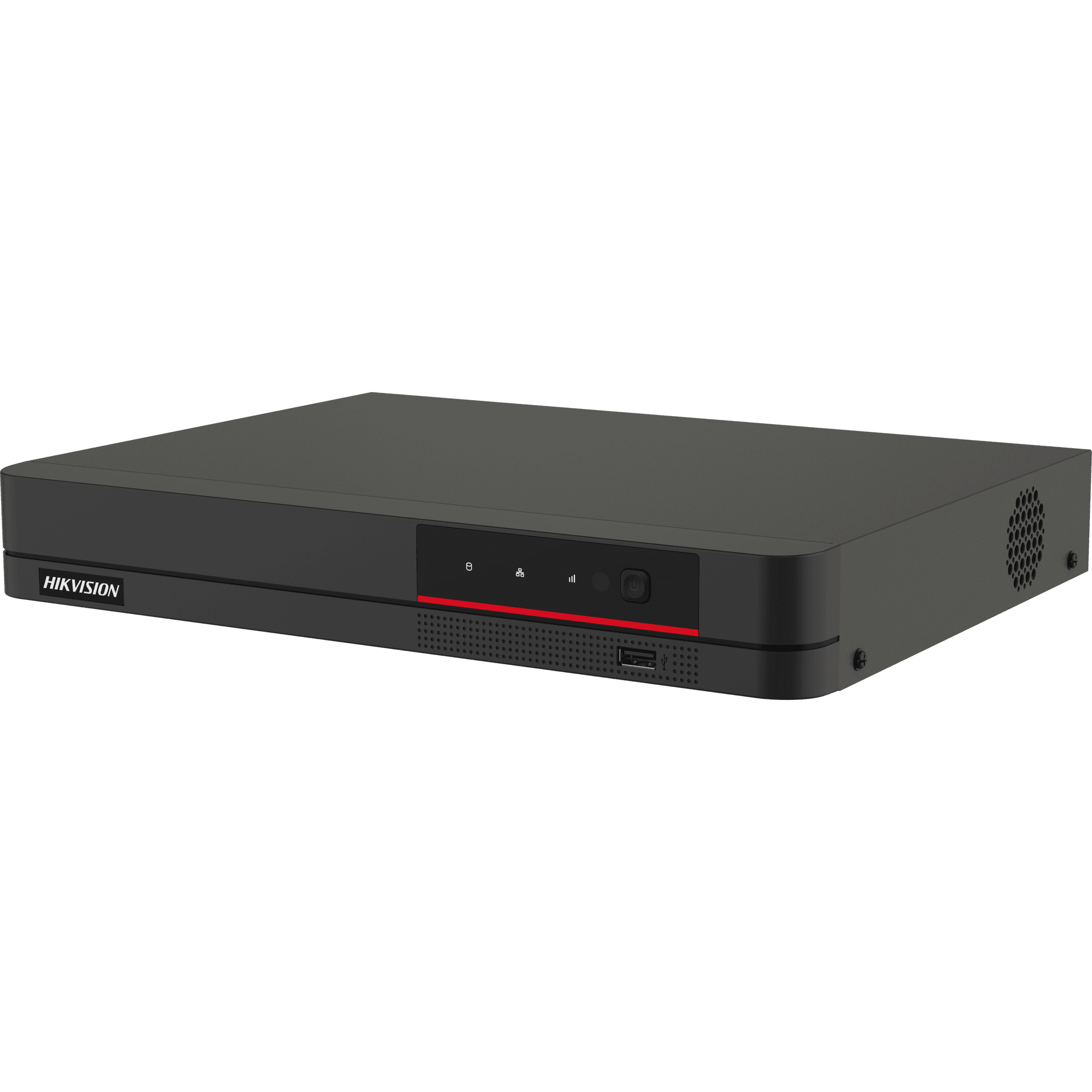
A recorder is a dedicated box with one or more hard drives that stores every camera on the system in one place. NVRs take IP cameras over the network; DVRs take older analogue cameras over coax. Many PoE NVRs also power the cameras through the same cable, so a single device handles recording, power and the network switch.
This is what makes long retention practical. With several terabytes of disk you keep weeks of continuous footage across all channels, search it by time and by motion event, and export a clip without touching the cameras. The recorder can sit somewhere hidden, so removing a camera no longer destroys the evidence.
The trade-offs: it is another device to power and maintain, and hard drives are consumables. Use drives rated for surveillance duty — they are designed to be written to continuously by many streams at once, which desktop drives are not.
Best for any installation with more than two or three cameras, and anywhere the footage genuinely has to survive.
Cloud
Cloud recording sends clips off-site to the manufacturer’s servers. Its real strength is that footage is safe from whatever happens at the property — fire, theft of the recorder, a cut cable. It also makes sharing easy: a clip becomes a link.
The costs are ongoing and structural. Cloud plans are subscriptions, retention is whatever the plan allows, and every recorded second travels over your upload bandwidth. Most Nordic home connections carry one or two cameras comfortably; eight cameras streaming continuously is a different matter. Cloud plans also typically store motion events rather than a continuous timeline, which is fine for a doorway and not enough for a yard where you need to see what happened between the events.
Best treated as a second copy of what matters, rather than the only copy.
How much storage do you actually need
Storage is bitrate multiplied by time. A single 4 MP camera at a normal bitrate writes roughly 15–25 GB per day of continuous recording. Switch to motion-triggered recording and that can fall by three quarters, depending on how busy the scene is. Multiply by the number of cameras, then by the number of days you want to keep. Working this out before you buy is the difference between a system that holds a month and one that has already overwritten the night you needed.
Two settings move the number more than anything else: resolution, and whether the camera records continuously or only on events. H.265 compression, which most current cameras support, roughly halves the file size compared with H.264 for the same picture.
What most installations end up doing
A recorder for retention, a card in each camera as a fallback for network outages, and cloud for the one or two cameras whose footage would matter most if the building itself were compromised. That combination survives the failures that actually happen, which no single method does on its own.
Browse our recorders and DVRs for recorders, PoE cameras for cameras that pair with them, 4G and Wi-Fi cameras for locations without fixed internet, and EZVIZ range for cameras with straightforward cloud options.
 Buying GuidesSecurity Cameras in Rain: Stop Droplets, Blur and False Alerts
 Buying GuidesFisheye Security Cameras: When a 360° Panoramic View Makes Sense
 Buying GuidesFilming Through a Window: Security Cameras Behind Glass