Buying Guides · updated 2026-10-16
Night Vision Explained: Infrared vs Colour Spotlight Cameras
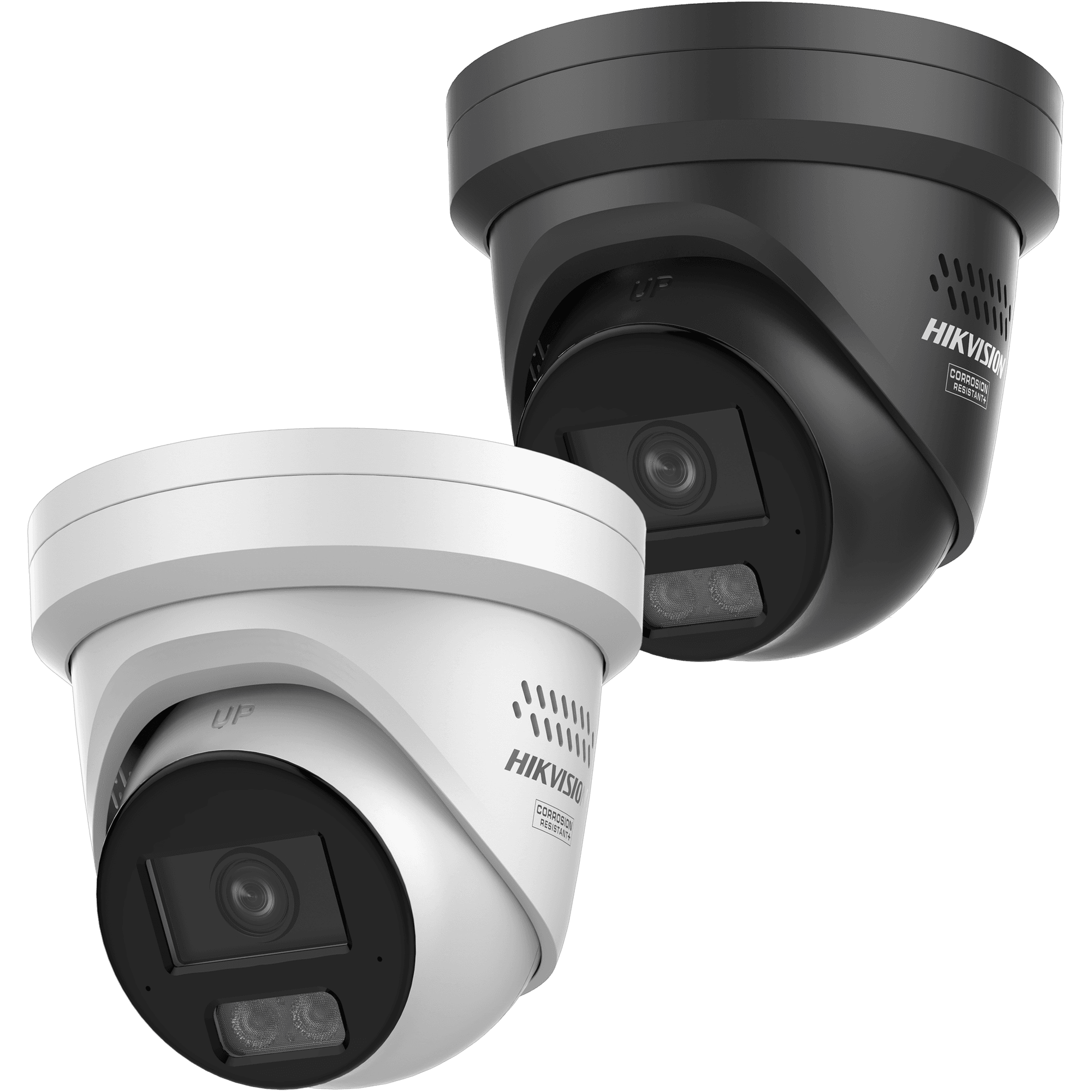
Most break-ins and most of the footage you will actually need happen after dark. That makes night performance the single most important thing to get right when choosing a security camera — and it is the spec that listings describe most vaguely. “Night vision up to 30 m” tells you almost nothing on its own. Here is what the different technologies actually do.
Infrared: invisible, reliable, black and white
Traditional night vision uses infrared LEDs. The camera switches to a monochrome sensor mode and illuminates the scene with light the human eye cannot see. Nobody outside knows the camera is lighting them up, nothing glows, and no neighbours are disturbed. The trade-off is that you get a black-and-white image: you will see that a person was there, what they did, and roughly what they were wearing, but not that the jacket was red.
Infrared range figures are honest only at the centre of the frame. A camera rated for 30 m will show a recognisable figure at 30 m directly ahead, but the corners will be considerably darker. Reflective surfaces close to the lens — a white wall, a window frame, falling snow — bounce IR straight back and can wash out the whole image, which is why mounting position matters as much as the rating.
Colour night vision with a spotlight
The alternative is a white LED spotlight that keeps the sensor in full-colour mode. The advantage is obvious and significant: clothing colour, vehicle colour, hair colour. For identifying someone after the fact, colour footage is worth far more to you and to the police than a grey silhouette.
The cost is that the light is visible. It announces the camera, it can annoy neighbours, and an intruder can see exactly where it is pointed. Most people find it works best over a driveway or yard, where it doubles as useful lighting, and less well on a bedroom-facing wall.
Dual-mode and starlight sensors: the practical answer
The better cameras no longer make you choose. They run infrared by default and switch the spotlight on only when motion is detected — quiet and invisible until something happens, then colour when it matters. Others use large “starlight” sensors that produce usable colour from ambient street lighting alone, with no spotlight at all.
If you are choosing today, this is what to look for. Our PoE camera range includes models with both illuminators, and the EZVIZ and Imou line-ups have several dual-mode options aimed squarely at home use.
Three things that matter more than the LED count
Lens aperture. A wider aperture gathers more light, and a good lens with modest illumination beats a cheap lens with a bright spotlight every time.
Mounting height and angle. Too high and you record the tops of heads; around 2.5 to 3 metres, angled slightly down, gives you faces. Keep walls and gutters out of the near field so they do not reflect the IR back.
Sensor size, not megapixels. Larger pixels collect more light. A 4MP camera with a good sensor will regularly outperform an 8MP one after dark, which is worth remembering when comparing spec sheets.
For sites with no mains power or network at all, our 4G and Wi-Fi cameras include battery and solar models with both illuminator types. Not sure which suits your property? Write to [email protected] and describe the location — we will suggest something that fits, with official EU distribution and full warranty.
 Buying GuidesBullet vs Dome vs Turret Cameras: Which Shape Should You Buy?
 Buying GuidesSecurity Cameras in Rain: Stop Droplets, Blur and False Alerts
 Buying GuidesFisheye Security Cameras: When a 360° Panoramic View Makes Sense