Buying Guides · ažurirano 2026-11-18
Bi-Spectrum Thermal Cameras: Seeing Intruders in Total Dark
Why Thermal Cameras Matter in a Northern Winter
In November, much of northern Europe spends more hours in darkness than in daylight. Ordinary security cameras manage this with infrared illuminators or white-light spotlights. Those work well near the house, but they struggle across a large yard, a long fence line or an open field. The light only reaches so far. Fog, falling snow and drizzle bounce it back into the lens, and a dark-clothed figure at the edge of the property can disappear completely.
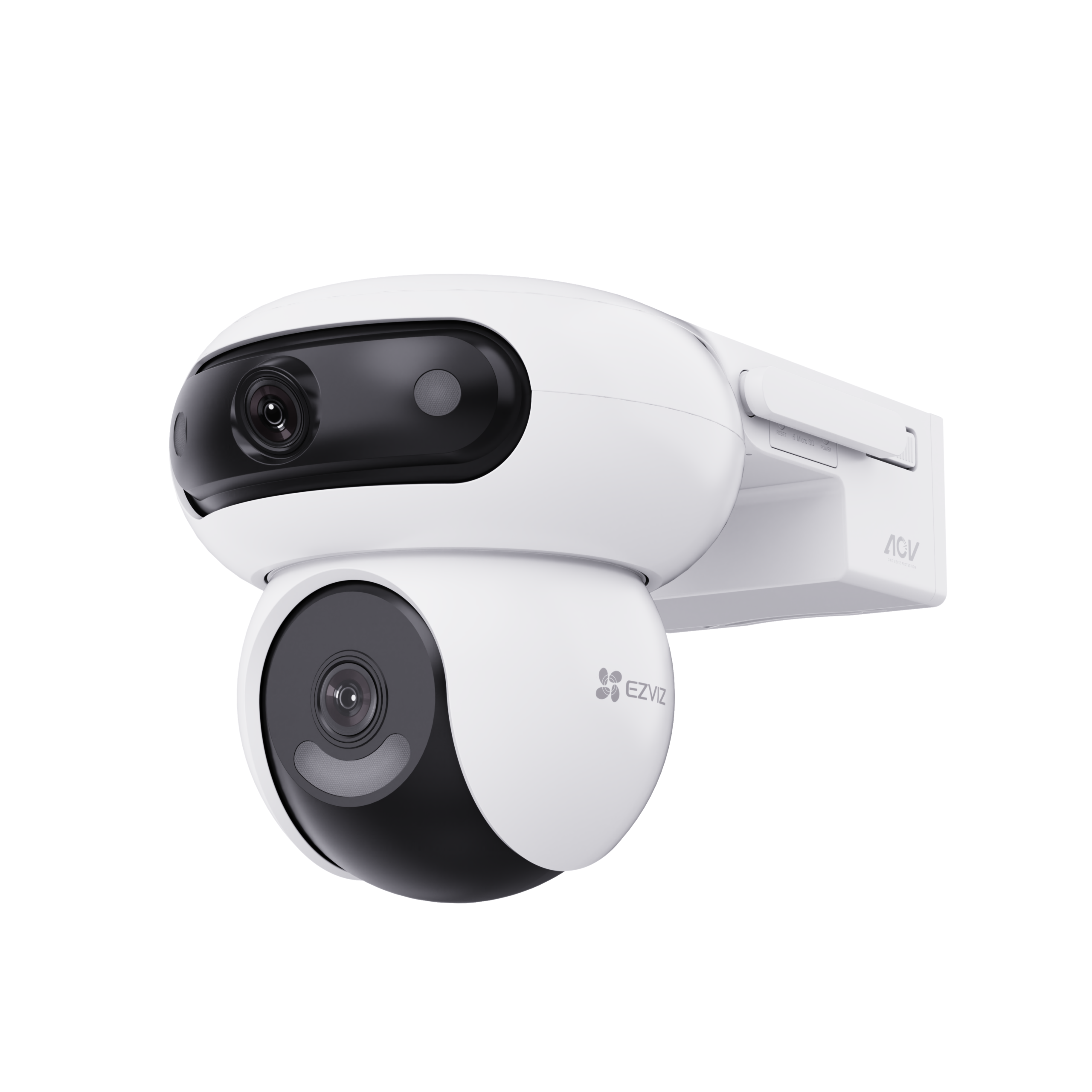
Thermal cameras take a different approach. They do not need any light at all. Instead, they detect the heat that people, animals and vehicles give off. A bi-spectrum thermal camera combines this heat image with a normal optical camera in the same housing. You get reliable detection in the dark and a recognisable picture when there is enough light to use it.
How Thermal Imaging Works
Every object gives off infrared radiation in the long-wave band, and warmer objects give off more of it. A thermal sensor measures these differences and turns them into an image. A person standing in a cold field shows up as a bright, clear shape, even on a moonless night.
Some practical points follow from this:
- No illumination is needed. The camera works the same at midnight as at dusk, and it does not give its position away with glowing IR LEDs.
- Headlights and glare do not blind it. Car lights, street lamps and low winter sun have far less effect on the thermal image.
- Shadows and camouflage help less. A person hiding in bushes or in the shadow of a building still shows up as a warm shape.
- Detail is limited. A thermal image shows shapes and temperature differences. It cannot show faces, clothing colours or number plates in a way that identifies someone.
What "Bi-Spectrum" Adds
A thermal-only camera tells you that something warm is moving by the fence. It cannot tell you who it is. A bi-spectrum camera solves this by pairing the thermal sensor with a visible-light sensor that looks at the same scene. You can view the two streams side by side. Some models can also overlay outline details from the optical image onto the thermal one, so the picture is easier to read.
In practice, the thermal channel does the detecting and the optical channel does the documenting. The thermal stream can trigger alarms on human or vehicle shapes. The optical stream records whatever visual evidence the available light allows. Many installers also pair a thermal camera with a separate high-resolution optical camera or a PTZ camera. The thermal unit spots the intrusion, and the second camera captures the detail.
Some bi-spectrum models also offer temperature-based functions, such as alerts when a hot spot appears in the scene. These can help you notice an overheating machine or a smouldering pile of material early. They are not a substitute for a certified fire alarm system. Always check what a specific model actually supports before relying on it.
Where a Thermal Camera Makes Sense
Thermal cameras cost more than standard IP cameras. They are best used where an ordinary camera would struggle, rather than as a general replacement. Typical good uses include:
- Long fence lines and perimeters around business premises, storage yards and building sites.
- Farms and rural properties with dark fields, machinery sheds and fuel stores, far from any street lighting.
- Boat sheds, lakeside plots and summer cottages where fog and mist often roll in at night.
- Car parks and open yards where lighting is patchy and vehicles create deep shadows.
- Sites with constant false alerts from moving shadows, headlights or swaying light. Here, heat-based detection can calm notifications down considerably.
For a front door, a driveway close to the house or a shop till, a good optical camera with colour night vision or infrared is usually the better choice. In those places you need detail, and the distances are short.
Limitations You Should Know About
Thermal imaging is powerful, but it is not magic. Before you buy, keep these limitations in mind:
- It cannot see through glass. Window glass blocks long-wave infrared. A thermal camera placed behind a window will mostly see the glass itself, so it must be mounted outdoors.
- Heavy snow and rain reduce range. Thermal copes with darkness and light fog far better than visible cameras. Dense snowfall or downpours still shorten how far it can detect.
- Low-contrast conditions. Around dawn and dusk, or in wet, overcast weather, the background can briefly reach a similar temperature to objects in the scene. Contrast drops, and detection becomes less reliable. Well-dressed people in very cold weather show less surface heat, but they normally still stand out against frozen ground.
- No identification. For evidence, you still need optical footage. Plan your system with this in mind.
- Lower resolution. Thermal sensors have far fewer pixels than optical sensors. Do not compare their resolution figures directly with megapixel cameras.
How to Choose the Right Model
When comparing bi-spectrum cameras, focus on the following specifications rather than on the headline resolution of the optical sensor.
Thermal resolution
A higher thermal resolution gives a clearer heat image and better detection at range. Entry-level sensors suit short to medium distances. Higher-resolution sensors suit larger perimeters.
Lens focal length
As with ordinary cameras, a short focal length gives a wide view over a short distance. A longer focal length gives a narrow view that reaches much further. Choose based on the area you need to cover: a wide lens for a yard, a narrow one for a long, straight fence.
Detection distance figures
Manufacturers often state separate distances for detecting a person and a vehicle. Treat these as figures for ideal conditions. A detection distance tells you that a warm shape can be noticed, not that it can be recognised. Plan with a sensible safety margin, especially for winter weather.
Smart detection and integration
Look for human and vehicle classification, line crossing and intrusion zones. These features turn the camera from a passive viewer into a real early-warning tool. Also check that the camera works with your NVR. Using the same brand for camera and recorder usually gives the fullest access to smart events.
Durability
Choose a weatherproof rating suitable for outdoor use and check the stated operating temperature range. Consider surge protection if the camera sits on an exposed pole or wall.
Installation Tips for Winter Conditions
- Mount it high and stable. A solid wall or pole mount prevents vibration from wind. Vibration can trigger false alarms on long-range lenses.
- Look along the perimeter, not across it. Aiming down the length of a fence lets one camera cover a longer stretch. It also makes line-crossing rules more reliable.
- Avoid pointing at heat sources. Chimneys, heat pump outdoor units, vents and parked cars with warm engines can create false triggers. Exclude them with detection zones.
- Keep the lens window clear. Snow, ice and spider webs on the front window reduce image quality. Check it after storms.
- Use PoE where possible. One cable for power and data is the most reliable choice for a perimeter camera. Back it up with a UPS so it keeps working during winter power cuts.
- Test at night before finishing. Walk the perimeter after dark and confirm that alerts trigger where you expect them to.
Privacy and Signage
A thermal picture may seem anonymous, but the optical channel of a bi-spectrum camera records people in a normal, recognisable way. The same European data protection rules apply as for any other camera. Keep the view on your own property as far as possible. Mask neighbouring areas and public paths, and put up clear signage that video surveillance is in use.
Conclusion
A bi-spectrum thermal camera does not replace your other cameras. It extends what you can see into conditions where they fail. During long, dark northern winters, it can reliably detect people and vehicles along fences, across yards and in mist, without lighting and with far fewer false alarms from shadows and headlights. Pair it with good optical cameras for identification, choose the lens to match your distances, and mount it carefully. It can then become the most dependable early-warning point in your whole surveillance system.
 Buying GuidesNadzorne kamere na mobitelu: vodič za postavljanje aplikacije
 Buying GuidesOdlazite za Božić? Provjerite sigurnosne kamere prije puta
 Buying GuidesVanjska rasvjeta za nadzorne kamere: bolje noćne snimke