Buying Guides · оновлено 2026-10-16
How to Choose a Home Security Camera in 2026: The Complete Buying Guide
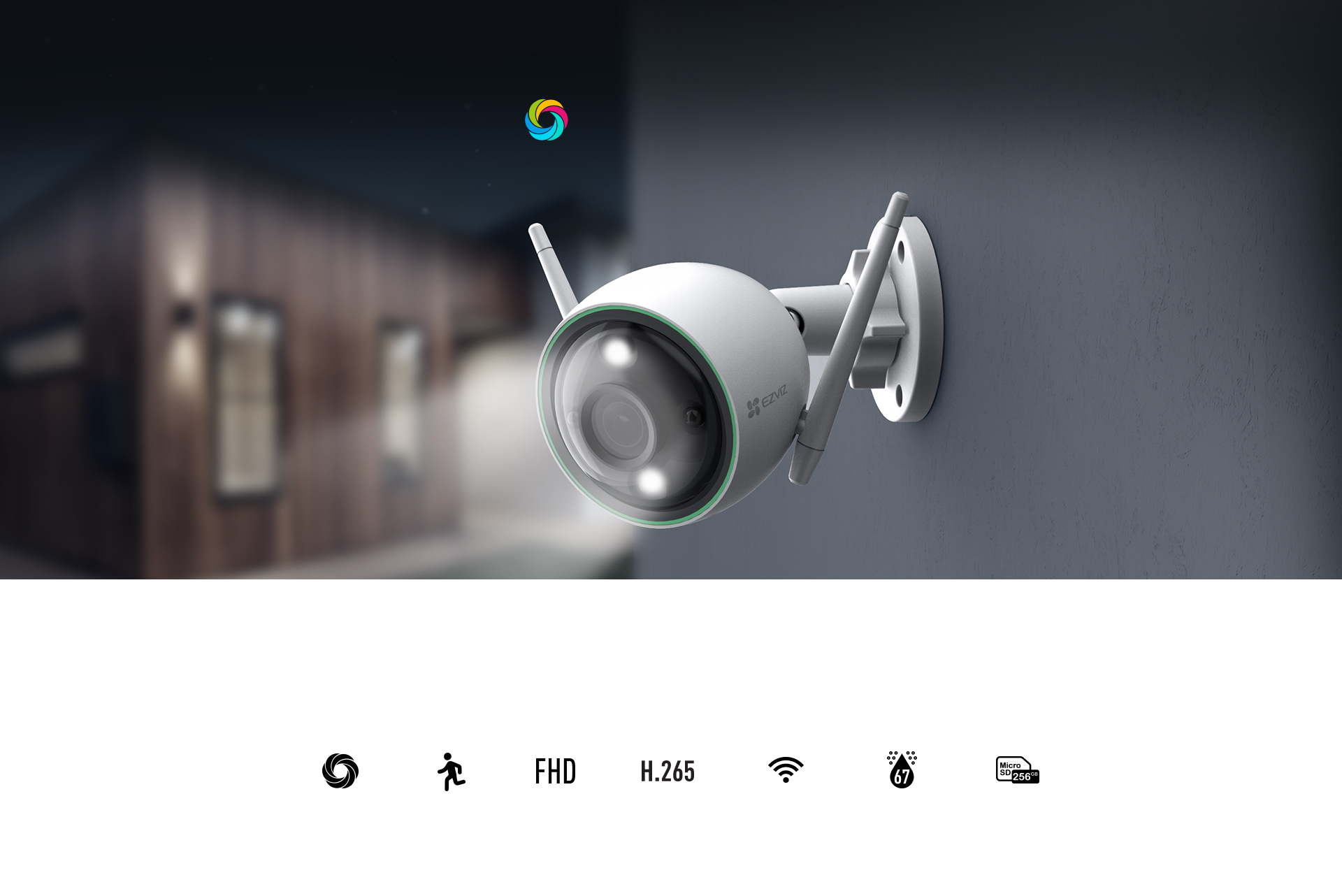
Choosing a home security camera in 2026 is easier than ever — and harder than ever. The technology has matured: crisp 4K sensors, colour night vision and AI person detection are now standard even on mid-range models. But the sheer number of options makes it difficult to know what actually matters for your home. This guide walks you through the six decisions that matter, in the order you should make them.
1. Start with the location: indoor or outdoor?
Everything else follows from where the camera will live. Outdoor cameras need an IP65/IP66 weatherproof rating, a working temperature range that survives Nordic winters (look for −30 °C), and stronger infrared for large dark areas. Indoor cameras can be smaller and cheaper, and often add features like two-way audio, pan/tilt and privacy shutters.
A typical family home is well covered with 2–3 outdoor cameras (front door, driveway, garden/back entrance) and 1–2 indoor cameras in shared spaces. Avoid pointing any camera at a neighbour’s property or the public street — more on the legal side below.
2. Power and connectivity: Wi-Fi, PoE or 4G?
This is the decision people most often get wrong, so take a moment here.
Wi-Fi cameras — easiest to install
Plug into a socket, connect to your home network, done. Perfect for apartments, rentals and anyone who does not want to run cables. The trade-off: video quality depends on your Wi-Fi signal, and a power cut or router reboot takes the camera offline. Battery-powered Wi-Fi models remove the socket requirement but need recharging every few weeks or a small solar panel.
PoE cameras — most reliable
PoE (Power over Ethernet) cameras receive both power and data through a single network cable. No batteries, no Wi-Fi dropouts, no interference — this is what professional installers use. If you are building or renovating, run Ethernet cable to your camera positions; you will never regret it. PoE is also the natural choice for multi-camera setups recorded on an NVR.
4G cameras — for places without internet
Summer cottages, farms, construction sites and boats often have no router at all. A 4G camera with a SIM card works anywhere with mobile coverage. We covered this category in depth in our guide to the best 4G security cameras of 2026.
3. Resolution and night vision: what is actually enough?
Megapixels sell cameras, but they are only half the story.
- 2 MP (1080p) — fine for small indoor rooms and doorways viewed from a few metres.
- 4 MP (2K) — the sweet spot for most homes in 2026: enough detail to identify faces at 5–8 metres without huge storage needs.
- 8 Мп (4K) — worth it for driveways and gardens where you may need to read a licence plate or zoom into recorded footage.
Just as important is the sensor and night performance. Traditional infrared night vision produces black-and-white footage; modern low-light sensors (Hikvision ColorVu, Dahua Full-Color and similar) keep the image in colour all night, which makes clothing and vehicle colours identifiable — often the detail that actually matters after an incident. If the area you monitor is completely dark, check the IR range (20–40 m is typical) or choose a model with a built-in spotlight.
4. Storage: SD card, NVR or cloud?
Ask yourself: if someone steals the camera, do I still have the footage?
MicroSD card storage in the camera is the simplest and has no monthly fees, but the recording disappears with the camera. An NVR (network video recorder) stores footage from all your cameras on a hard drive inside your home — the standard solution for PoE systems, with weeks of continuous recording. Cloud storage keeps clips safe off-site even if equipment is stolen, at the cost of a subscription and dependence on your internet connection.
The robust setup for a detached house: PoE cameras recording to an NVR, plus cloud or SD backup for the most critical camera. Browse complete video surveillance systems if you prefer a matched kit.
5. Smart detection: let AI filter the noise
Motion alerts were the biggest frustration of the previous camera generation — every cat, headlight and swaying branch triggered a notification. Modern cameras run AI on the device and can distinguish people and vehicles from everything else. In practice this is the feature that decides whether you still pay attention to alerts after the first month. Look for: human/vehicle classification, adjustable detection zones, and line-crossing rules for driveways and fences.
If you want the camera to do more than record — sirens, strobe light, two-way talk-down — active deterrence models will challenge an intruder before anything happens. And for a complete security setup, cameras pair naturally with an intrusion alarm system.
6. Privacy and the law: film your property, not your neighbours
In the EU, recording your own private property is fine. Problems start when a camera captures the neighbour’s garden, shared stairwells or public pavement. The practical rules: aim cameras at your own property, use privacy masking to black out anything beyond it, put up a small sign if the camera covers an area visitors enter, and store footage only as long as you need it. Indoor cameras with physical privacy shutters are a good choice for shared family spaces.
Quick recommendations by scenario
- Apartment — one indoor Wi-Fi camera with a privacy shutter, plus a video doorbell.
- Detached house — 4 MP PoE cameras at entrances and driveway, NVR in a locked cupboard, one indoor camera.
- Summer cottage / off-grid site — 4G camera with solar panel and SD + cloud storage.
- Small business — PoE system with NVR, AI person detection, paired with an alarm system.
The bottom line
Decide the location first, get the power and connectivity right, and buy a camera whose night vision matches the darkness of your site — then resolution, storage and AI features fall into place. If you are unsure which setup fits your home, our team is happy to help you put together a system that matches your property and budget.
Explore the full range of IP cameras and PoE cameras at Cameraworld — free shipping on orders over 140 €.
 Buying GuidesMotion Detection Zones and Privacy Masks: Setup Guide
 Buying GuidesSecurity Cameras for Holiday Homes and Cottages: Setup Guide
 Buying GuidesSecurity Cameras in Winter: Cold Weather Tips and Fixes