Buying Guides · aktualizované 2026-10-16
Colour Night Vision vs Infrared: Which Do You Need?
Why Night-Time Performance Matters
Most break-ins and suspicious activity happen after dark, which means how your camera performs at night is arguably more important than how it performs during the day. Reolink and other manufacturers now offer two very different approaches to night-time imaging: traditional infrared (IR) night vision and newer colour night vision technology. Understanding the difference will help you choose the right camera for your specific location.
How Infrared Night Vision Works
Infrared cameras use built-in IR LEDs that emit light invisible to the human eye but visible to the camera sensor. When ambient light drops below a certain threshold, the camera switches to black-and-white mode and the IR LEDs illuminate the scene. This has been the standard approach in CCTV for decades because it is reliable, energy-efficient and works in complete darkness.
The main limitation is that infrared footage is monochrome. You can clearly see shapes, movement and faces, but you lose colour detail entirely. This means you cannot describe a vehicle’s colour or the colour of someone’s clothing from IR footage alone, which can matter when reporting an incident to the police.
How Colour Night Vision Works
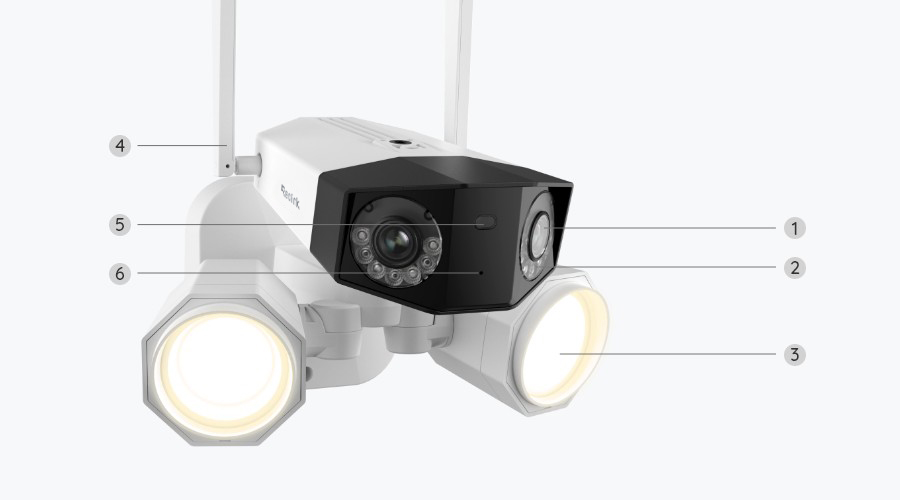
Colour night vision cameras use a larger image sensor combined with a wider aperture lens to gather more ambient light, often supplemented by a built-in white spotlight rather than infrared LEDs. This allows the camera to render full colour images even in low-light conditions, rather than switching to black-and-white.
Some cameras offer a smart or adaptive mode, where the white light only activates when motion is detected, reducing light pollution and preserving battery life on battery-powered models. Others keep the spotlight on continuously for consistent colour footage throughout the night.
The Trade-Offs to Consider
Colour night vision produces more useful footage for identification purposes, but it does have drawbacks worth knowing about before you buy.
- Light pollution: A white spotlight is visible to neighbours and passers-by, which may not suit every location, particularly in built-up residential areas.
- Battery drain: On battery or solar-powered cameras, running a spotlight consumes considerably more power than IR LEDs, shortening runtime between charges.
- Complete darkness: In areas with absolutely no ambient light, colour night vision can sometimes struggle compared with a strong IR system, since it still relies on some source of light to work with.
- Deterrent effect: On the plus side, a bright white light activating on motion can act as a visible deterrent, alerting intruders that they have been spotted.
Which Areas Suit Which Technology
For most front doors, driveways and gardens with some ambient light from street lamps or nearby buildings, colour night vision tends to give the most useful results, since you will actually be able to identify vehicle colours and clothing in any footage you need to review.
For darker locations such as back gardens, wooded boundaries, sheds or rural properties with no street lighting nearby, traditional infrared often performs more reliably. It does not depend on ambient light and will not disturb neighbours or wildlife with a bright spotlight running throughout the night.
Dual-Mode Cameras: The Best of Both Worlds
Many current camera models now include both technologies in one unit, letting you choose between a colour mode, an infrared mode, or an automatic setting that switches between the two based on conditions and detected motion. This flexibility is worth prioritising if you are unsure which approach will suit your property, since it allows you to test both and adjust as needed after installation.
Some models also let you fine-tune the spotlight brightness or set it to only activate briefly during confirmed motion events, which is a useful compromise between colour detail and minimising light pollution or battery consumption.
Other Factors That Affect Night Performance
Regardless of which technology you choose, a few other elements influence how well a camera performs after dark.
- Sensor size: Larger sensors gather more light and generally produce clearer night-time images in both IR and colour modes.
- Lens aperture: A wider aperture (lower f-number) lets in more light, benefiting colour night vision in particular.
- Mounting height and angle: Position the camera to avoid pointing directly at bright light sources, which can wash out footage or trigger unnecessary glare.
- Nearby reflective surfaces: White walls, glass and water features positioned close to the camera can cause IR reflection or overexposure, so consider the surroundings when installing.
Making the Right Choice for Your Setup
If identifying details such as vehicle colour or clothing is a priority, and you are comfortable with a spotlight activating on motion, colour night vision is likely the better fit for entrances, driveways and well-lit garden areas. If discretion, battery life or performance in pitch darkness matters more to you, infrared remains a dependable and proven choice, especially for remote or rural locations.
Where budget allows, a dual-mode camera offers the most flexibility, letting you adapt to different areas of your property and change settings as your needs evolve. Whichever route you choose, matching the technology to your specific location will make a real difference to the usefulness of your footage when it matters most.
 Buying GuidesPredĺženie napájacieho kábla kamery: bezpečné možnosti
 Buying GuidesMotion Detection Zones and Privacy Masks: Setup Guide
 Buying GuidesSecurity Cameras for Holiday Homes and Cottages: Setup Guide