Buying Guides · ενημερώθηκε 2026-11-11
Hikvision and Dahua Tech Terms Explained: ColorVu, WizSense
Why the Brand Labels Matter
Product pages for Hikvision and Dahua cameras are full of trademarked names: ColorVu, AcuSense, DarkFighter, WizSense, TiOC, Starlight. Each name describes a real technology. Without a translation, though, it is hard to tell which ones you need and which are simply nice to have.
The question matters most in November. In northern Europe it is dark before most people get home, so a camera spends more of its working day in low light than in daylight. Many of these labels describe how a camera copes with darkness or how it filters out false alerts. Both make a big difference in winter.
This guide explains the most common terms in plain English and shows what each one means for a home or small business.
Hikvision: The Main Technology Names
AcuSense
AcuSense is Hikvision's name for deep-learning detection built into the camera.
- What it does: it sorts motion into people, vehicles and other movement, so you can be alerted only for humans or vehicles.
- Why it helps: moving branches, rain, snowfall, headlights and passing cats generate far fewer notifications.
- Active deterrence: some AcuSense models add a flashing light and an audible warning, often called Live Guard, which can trigger when a person is detected.
- Who it suits: almost everyone who wants useful alerts rather than constant noise.
ColorVu
ColorVu cameras aim to produce colour images at night. They usually combine three things:
- a lens with a very wide aperture
- a sensor that is sensitive in low light
- a soft warm-white supplementary light that switches on when ambient light is too low
The result is colour footage where an ordinary camera would switch to black-and-white infrared. Colour makes it far easier to describe a jacket, a car or a bag afterwards.
The trade-off is the visible light. It acts as a deterrent, but neighbours may not appreciate it. Some ColorVu models offer a hybrid light mode instead. In this mode the camera stays on infrared until it detects a person or vehicle, then switches to white light. Check the specification of the exact model you are considering.
DarkFighter
DarkFighter refers to cameras built for very low-light performance. They typically use larger or more sensitive sensors and stronger image processing, so they keep a usable image when light is scarce. That might mean a car park lit by a single lamp, or a yard under cloud with only distant street lighting.
DarkFighter cameras can usually also use infrared when it becomes fully dark.
DeepinView
DeepinView is a higher-end Hikvision family with more advanced on-board analysis. Depending on the model, features can include:
- number plate recognition
- face capture
- several detection algorithms running at once
These cameras suit businesses with specific analytical needs more than typical homes.
TandemVu
TandemVu cameras combine more than one camera in a single housing. Most often this means a fixed wide-view lens alongside a PTZ (pan-tilt-zoom) module. You keep sight of the whole scene while the PTZ part zooms in on detail, and some models track a target automatically. They are well suited to large yards, forecourts and car parks.
Dahua: The Equivalent Names
Dahua uses its own vocabulary for broadly similar ideas, and Imou products are built on Dahua technology. Here is how the Dahua terms line up with the Hikvision ones.
WizSense
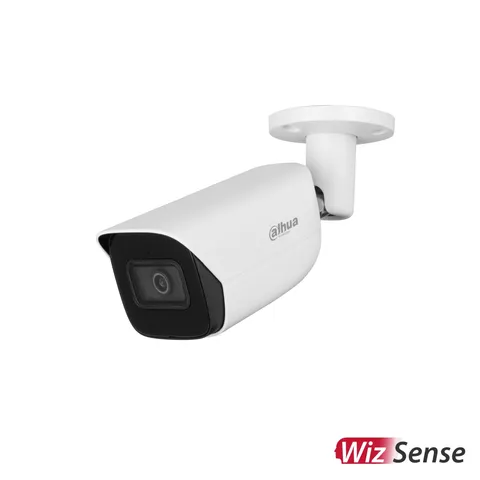
WizSense is Dahua's AI-based series and is roughly comparable to AcuSense. Two features to look for:
- SMD Plus (Smart Motion Detection): classifies people and vehicles to cut false alarms.
- Perimeter protection: lets you draw tripwires and intrusion zones that react only to the target types you select.
WizMind
WizMind is Dahua's more advanced AI range, in a similar position to Hikvision's DeepinView. It is aimed at professional projects that need deeper analytics.
Full-color
Full-color is Dahua's counterpart to ColorVu. It uses a wide-aperture lens, a sensitive sensor and warm white light to deliver colour at night. Some models also offer smart dual illumination, which works much like Hikvision's hybrid light.
Starlight
Starlight is Dahua's term for good low-light sensitivity, so the camera keeps colour longer as the light fades. It is broadly comparable in spirit to DarkFighter, although exact performance varies by model.
TiOC
TiOC is often described as a three-in-one camera: AI detection, full-colour night imaging and active deterrence (a red and blue warning light plus a siren) in one unit. It is aimed at sites where scaring intruders off matters as much as recording them.
Quick Translation Table
If you are comparing the two brands side by side, these pairings are a useful starting point. They are approximate, because each range contains many models with different specifications.
- AI detection of people and vehicles: Hikvision AcuSense; Dahua WizSense with SMD Plus
- Colour at night with white light: Hikvision ColorVu; Dahua Full-color
- Strong low-light sensitivity: Hikvision DarkFighter; Dahua Starlight
- Advanced professional analytics: Hikvision DeepinView; Dahua WizMind
- Light and siren deterrence: Hikvision AcuSense models with Live Guard; Dahua TiOC
Which Features Matter for Your Situation?
Typical home or holiday cottage
AI detection is the most valuable feature. It turns a camera that pings your phone every few minutes into one you actually trust. A fixed bullet or turret with AcuSense or WizSense covers most driveways and gardens well.
If you want colour at night and there are no neighbours to disturb, add ColorVu or Full-color.
Small business, farm or yard
Consider active deterrence for an unattended site. A light and siren that trigger on a person can stop an incident before it starts. For wide areas, TandemVu-style or PTZ cameras reduce the number of units needed.
For entrances where you need to identify vehicles, look at models that list plate capture, and plan the mounting angle carefully.
Very dark or remote locations
If there is almost no ambient light, colour cameras rely entirely on their own white light. In that case, decide whether visible lighting is acceptable. If it is not, a good infrared or DarkFighter/Starlight camera may be the more discreet choice.
For perimeters in fog, snow or total darkness, thermal and bi-spectrum cameras are another option. They detect heat rather than light.
Things to Check Before You Buy
Brand labels are a starting point, not a complete specification. Check the following on the product's datasheet:
- Exact features of the model. Not every camera in a family has every function. Deterrence, hybrid light and microphones vary from model to model.
- Recorder compatibility. To filter recordings by person or vehicle on an NVR, the recorder must support those smart events. A basic recorder may treat all alerts as ordinary motion.
- Lens and field of view. A wide lens shows more of the scene but less detail at distance. Choose to suit the area you need to cover.
- Light range. Infrared and white-light ranges are quoted in metres. Make sure they reach the area you care about.
- Firmware. Detection accuracy and features are often improved through updates, so keep cameras and recorders up to date.
- Weather rating. Outdoor cameras should carry a suitable IP rating for rain and snow. Use a junction box where cable joints would otherwise be exposed.
Setting Up Smart Features for Winter
Even the best AI camera needs sensible settings. Short days and wet, snowy weather test detection hard, so it is worth spending ten minutes on configuration:
- Enable human and vehicle filtering, and turn off generic motion alerts if your system allows it.
- Draw detection zones that exclude roads, hedges and trees heavy with snow.
- Set sensitivity moderately at first, then adjust after a few nights of real alerts.
- Schedule deterrence lights and sirens for hours when the property is empty, so they do not trigger on family members.
- Check the camera's night image after the first snowfall. Snow reflects light strongly and can change exposure.
Conclusion
Hikvision and Dahua use different names, but they solve the same problems: fewer false alerts, better images in the dark and ways to deter intruders before they act.
For most homes, AI detection is the priority, followed by colour night vision where lighting is acceptable. Businesses and remote sites should also weigh active deterrence and wide-area cameras.
Whatever the label says, always confirm the exact features of the specific model, and check that your recorder supports them.
Ζητήστε προσφορά εγκατάστασης Προβολή όλων: Κάμερες HIKVISION →
 Buying GuidesReolink vs Hikvision vs Dahua: Which Camera Brand Suits You?
 Buying GuidesCamera Day/Night Settings: Fix Flicker and Late Switching
 Buying GuidesBullet vs Dome vs Turret Cameras: Which Shape Should You Buy?