Buying Guides · aktualisiert 2026-10-16
PoE oder WLAN Überwachungskamera: Was ist 2026 die richtige Wahl?

Jedes Kameraprojekt beginnt an derselben Weggabelung: Kabel verlegen oder kabellos? Es klingt nach einem Detail, doch genau diese Entscheidung bestimmt, wie zuverlässig Ihr System wird, was die Installation kostet und wie gut alles in fünf Jahren noch funktioniert. Die Grundlagen der Kamerawahl haben wir bereits behandelt — heute geht es um die Frage, die uns am häufigsten gestellt wird: PoE oder WLAN?
So funktionieren die beiden Techniken
Wi-Fi Kameras verbinden sich drahtlos mit dem Router und beziehen Strom aus der Steckdose oder einem Akku. Die Installation dauert zehn Minuten: einstecken, App öffnen, QR-Code scannen.
PoE-Kameras (Power over Ethernet) receive both power and data through a single network cable connected to a PoE switch or NVR recorder. Installation requires running a cable — but that one cable replaces the power adapter, the Wi-Fi connection and most future headaches.
Zuverlässigkeit: der größte Unterschied in der Praxis
Video surveillance is only as good as its weakest moment. A Wi-Fi camera depends on three things at once: wireless signal strength, a working router and a powered socket. A microwave oven, a thick concrete wall, a router firmware update or a tripped fuse can all take your camera offline — usually exactly when you are away.
A PoE camera has one dependency: the cable. No interference, no dropped frames at range, no dead batteries. This is why practically every professional installation — shops, warehouses, apartment buildings — is built on PoE-Kameras mit NVR. Wenn die Aufnahmen wirklich zählen, gewinnt das Kabel.
Bildqualität und Bandbreite
A single 4K camera streams continuously at 8–16 Mbps. One Wi-Fi camera handles that fine; four of them start competing with your phones, TV and laptops for the same wireless spectrum. PoE cameras each get a dedicated full-duplex cable, so an 8-camera 4K system runs without a single dropped frame. If you plan more than 2–3 cameras or want 4Kwill, fährt mit PoE besser.
Installation und Kosten
Hier punktet WLAN. Eine kabellose Kamera ist günstiger in Betrieb zu nehmen: kein Switch, keine Kabel, kein Bohren. Sie ist die richtige Antwort für Mietwohnungen, fertige Innenräume und Stellen, an denen Kabelverlegung unrealistisch ist.
PoE has a higher entry cost — cable runs plus a PoE switch or an NVR with built-in PoE ports — but the per-camera price of wired models is often niedriger than comparable wireless ones, and there are no batteries to replace. Over a system’s lifetime the total cost usually evens out or favours PoE.
Stromausfälle und Sicherheit
Zwei Details, die man zu spät entdeckt. Erstens: Bei Stromausfall stirbt die WLAN-Kamera mit dem Router — selbst wenn die Kamera einen Akku hat. Ein PoE-System braucht nur eine USV am Switch/NVR, damit alle Kameras und der Rekorder weiterlaufen. Zweitens: Ein Funksignal lässt sich prinzipiell stören, ein Kabel nicht. Für den Perimeterschutz von Haus oder Firma zählt dieser Unterschied.
Wann WLAN die richtige Antwort ist
Wireless is not the lesser option — it is the right tool in the right place:
- Mietwohnungen — no drilling, take it with you when you move.
- Fertige Innenräume — one indoor camera does not justify opening walls.
- Stellen ohne Kabelweg — a detached garage or gate post is often easier to cover with a battery camera plus solar panel.
- Schnelle temporäre Einsätze — construction phases, summer seasons, short-term monitoring.
Wählen Sie IP-Kameras in both wired and wireless versions — many of our models, like the EZVIZ H8C family, come in Wi-Fi, PoE and even 4G variants of the same camera. And if there is no internet at the site at all, see our Leitfaden für 4G-Kameras.
Fazit
Die häufigste Lösung, die wir mit Kunden bauen, ist ein Hybrid: PoE-Kameras mit NVR für Eingänge und Einfahrt plus ein bis zwei WLAN-Kameras für die Lücken im Haus. Komplette Systeme finden Sie in unserer PoE when you are building a permanent system, want 24/7 recording to an NVR, plan several cameras or need 4K detail — in short, when surveillance is the point. Choose WLAN when simplicity, flexibility and quick installation matter more than absolute reliability — typically 1–2 cameras in or around a home.
Die häufigste reale Konfiguration, die wir Kunden beim Aufbau helfen, ist eine Hybridlösung: PoE-Kameras mit einem NVR für Eingänge und Einfahrt, plus ein oder zwei Wi-Fi-Kameras, die Lücken im Innenbereich füllen. Komplette Systeme und alles drumherum finden Sie in unserem Videoüberwachungsbereich — free shipping from 99 € to most EU countries (Estonia from 140 €), and our team is happy to spec a system for your site.
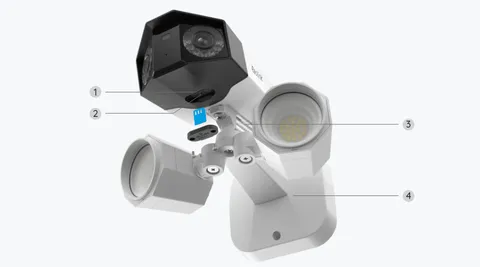 Buying GuidesPoE-Leistungsbudget: Versorgt Ihr Switch oder NVR alle Kameras?
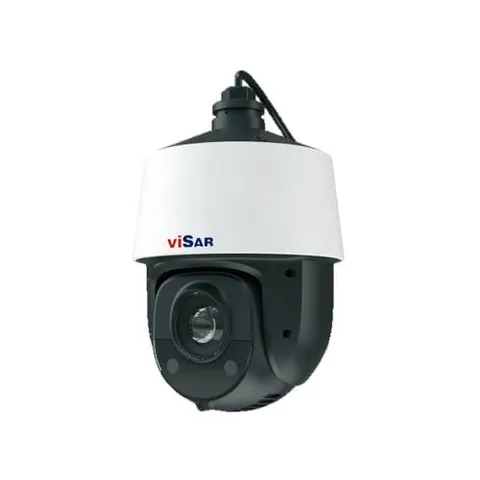 Buying GuidesVideoaufnahmen schnell finden: Smarte Suche in NVRs und Apps
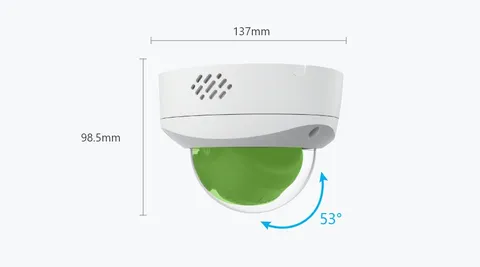 Buying GuidesNeue microSD-Karte in der Kamera: einsetzen, formatieren, testen