Buying Guides · aġġornat 2026-10-16
Smoke Detector Buying Guide 2026: Types, Wiring and Placement
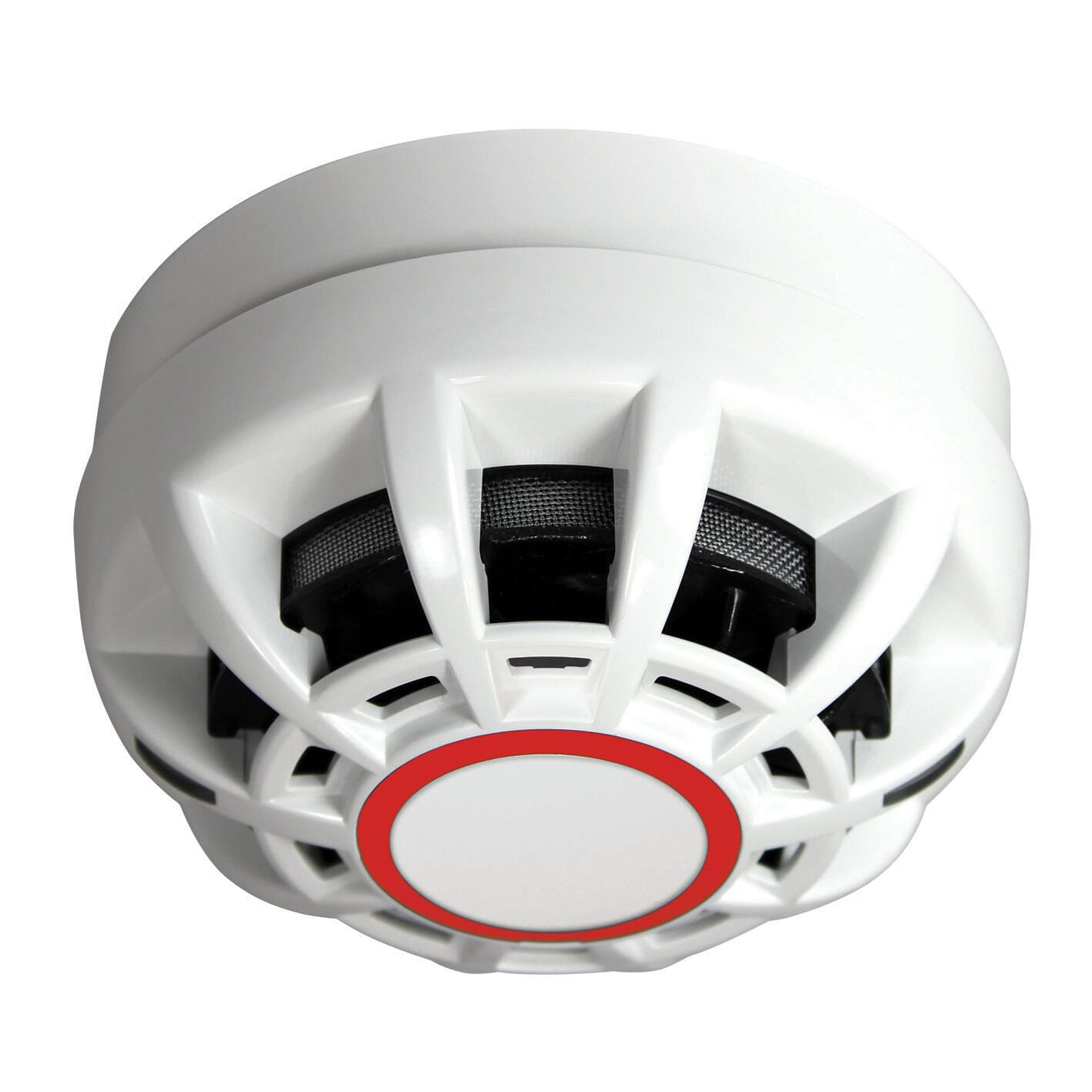
Our very first customers ordered smoke detectors – and that is no coincidence. A working smoke detector is the single cheapest life-safety device you can install, and in most European countries it is also required by law. In this guide we explain how smoke detectors work, which type fits your home or business, and which models we recommend from our stock.
Why smoke detectors matter
Most fatal fires happen at night, when smoke spreads silently and disables people before flames ever reach them. A detector gives you the two or three minutes that make the difference. Estonian and EU regulations require at least one working smoke detector in every dwelling, and businesses need a documented fire-safety solution.
The main types
1. Optical (photoelectric) smoke detectors
An optical chamber detects smoke particles scattering a light beam. This is the standard choice for homes, offices and hallways – it reacts quickly to smouldering fires, which are the most common type in living spaces.
2. Heat detectors
Heat detectors trigger at a fixed temperature (typically 57-90 C) or on a rapid temperature rise. They are the right choice for kitchens, garages, boiler rooms and dusty workshops, where a smoke detector would give false alarms.
3. Combined smoke + heat detectors
Dual-sensor models combine both technologies in one housing and cover more fire scenarios with fewer false alarms. A good pick for open-plan spaces.
Standalone or connected to an alarm system?
Battery-powered standalone detectors simply sound their own siren. Wired system detectors (12 V or 24 V, 2-wire or 4-wire) connect to an alarm or fire panel: the panel can then alert a monitoring company, send a phone notification, trigger sirens across the building, and log events. If you already have an intruder alarm panel, adding wired smoke detectors is inexpensive and far more capable.
2-wire vs 4-wire: 2-wire detectors draw power from the same pair that carries the alarm signal – simplest wiring on a dedicated fire zone. 4-wire detectors use separate power and relay contacts, which makes them compatible with practically any alarm panel zone. Models with auto-reset restore themselves after the alarm clears, so the panel can re-arm without anyone climbing to the ceiling.
Our recommendations
- Sentek SD119-2 smoke detector – simple 2-wire optical detector for alarm panel fire zones
- SD119-2L with base, 24 V, LED – 2-wire detector with mounting base for 24 V fire panels
- Sentek SD119-4-12 4-wire, 12 V – connects to any intruder alarm panel zone
- Sentek SD119-4ARB with buzzer and auto-reset – our bestseller: built-in siren, relay output and automatic reset
- Sentek SD119-4HARB-12 smoke + heat combo – dual sensor with auto-reset for maximum coverage
- Apollo Orbis A1R 57 C heat detector – professional heat detector for kitchens and garages
Where to install
Mount detectors on the ceiling, at least 50 cm from walls and light fittings, ideally in the centre of the room. Place one in every bedroom, in hallways on every floor, and in the living room. Use heat detectors in the kitchen, garage and boiler room. Avoid bathrooms and spots right next to ventilation outlets, where steam and airflow cause false alarms.
Maintenance
Test the detector monthly with the test button and vacuum the vents twice a year – dust is the number one cause of false alarms. Standalone units need a battery change once a year unless they have a sealed 10-year battery. Every detector, wired or not, should be replaced after about 10 years as the optical chamber degrades.
Not sure which detector fits your alarm system? Contact us – we answer the same day and all products above are in stock with fast delivery across Europe.
 Buying GuidesMotion Detection Zones and Privacy Masks: Setup Guide
 Buying GuidesSecurity Cameras for Holiday Homes and Cottages: Setup Guide
 Buying GuidesSecurity Cameras in Winter: Cold Weather Tips and Fixes