Buying Guides · nuashonraithe 2026-10-27
Bullet vs Dome vs Turret Cameras: Which Shape Should You Buy?
Why the Shape of a Security Camera Matters
Most camera product pages put resolution, night vision and smart detection first. The housing shape gets far less attention, yet it affects how the camera performs year-round. It shapes how well it copes with rain and snow, how it behaves at night, how easy it is to aim and how tempting it is to tamper with.
The three most common designs for fixed cameras are bullet, dome and turret. Some brands call the turret an "eyeball" camera. Reolink, Hikvision, Dahua, EZVIZ and Imou all make cameras in more than one of these shapes, often with very similar image sensors inside. Choosing the right shape for each location is therefore a practical decision, not a cosmetic one.
With dark afternoons, wet weather and the first snow arriving across northern Europe, late autumn is a good time to get this right. A poorly chosen housing shows its weaknesses most clearly in winter.
Bullet Cameras: Visible, Long-Reaching and Easy to Aim
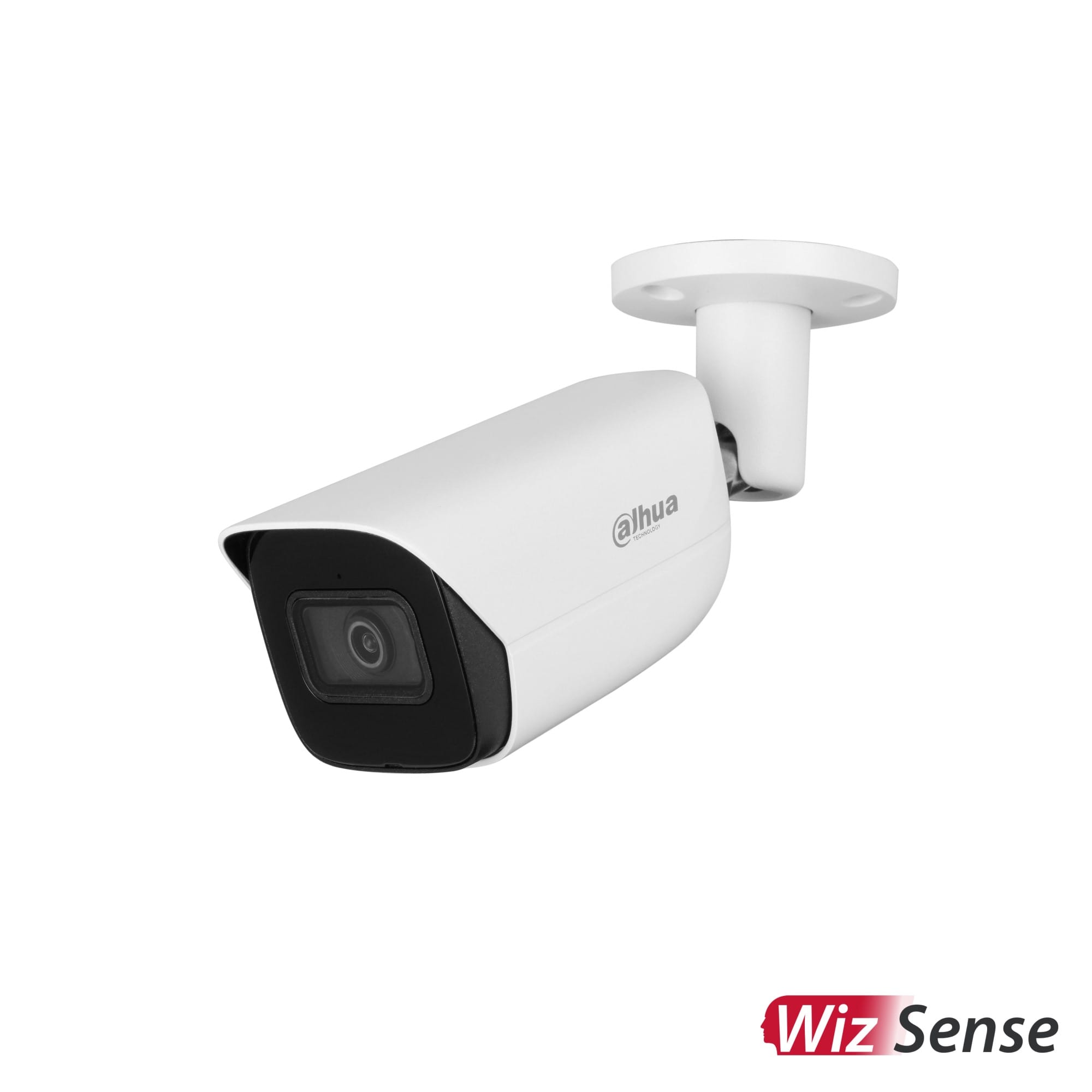
A bullet camera has a cylindrical or box-shaped body on an arm, usually with a short hood over the front glass. It is the classic "this property is under surveillance" look.
Strengths
- Visible deterrent: anyone approaching can clearly see a camera pointing at them.
- Longer lenses fit well: the body has room for varifocal and motorised zoom lenses. Bullets are therefore a common choice for driveways, gates and car parks where you need detail at a distance.
- Built-in rain hood: the hood keeps much of the rain, snow and low sun off the front glass.
- Simple aiming: the mounting arm lets you point the camera in almost any direction, including along a wall.
- Room for extras: many models carry larger infrared LEDs, spotlights or sirens.
Weaknesses
- Easier to knock or redirect: a determined person with a stick can push a low-mounted bullet out of position.
- Spiders love them: the hood and arm give insects and webs a sheltered spot right in front of the infrared light. This causes false alerts at night.
- Birds may perch on top: the body can collect droppings or snow on the hood.
Dome Cameras: Discreet and Vandal-Resistant
A dome camera hides the lens behind a clear or smoked plastic bubble on a round base. From a distance it is hard to tell which way it is pointing, and that uncertainty can be a deterrent in itself.
Strengths
- Tamper resistance: there is no arm to grab. Many professional domes carry an IK impact rating, with IK10 being the highest commonly used for cameras. Check the specification of the exact model.
- Discreet appearance: domes suit shops, offices, stairwells, reception areas and homes where you do not want an aggressive look.
- Ceiling-friendly: ideal under eaves, carports and canopies, and indoors on ceilings.
Weaknesses
- Infrared reflection: the infrared light passes through the same bubble as the lens. Dust, fingerprints, scratches or raindrops on the bubble can bounce light back into the lens and cause hazy night footage. The foam ring around the lens must sit firmly against the bubble.
- Rain and snow on the bubble: with no hood, droplets sit directly in the field of view if the camera is exposed. Mount domes under some form of cover outdoors.
- Limited aiming on walls: domes are designed for ceilings. On a wall, part of the housing may appear at the edge of the image unless you add a wall bracket.
- Shorter reach in some models: compact domes usually have fixed wide-angle lenses rather than long zooms, though varifocal domes do exist.
Turret (Eyeball) Cameras: The All-Rounder
A turret camera looks like a dome without the bubble. A ball-shaped lens unit sits in a round base, and the infrared LEDs sit beside the lens rather than behind shared glass. This design has become very popular for homes and small businesses.
Strengths
- No infrared bounce-back: the lens and infrared LEDs are separated, so night images tend to be cleaner than with a bubble dome.
- Fewer spider problems: there is no hood or arm for webs to hang from, although insects can still be attracted by the infrared light.
- Flexible mounting: the ball rotates and tilts, so turrets work on both walls and ceilings.
- Neat appearance: visible enough to deter, but less bulky than a bullet.
Weaknesses
- Exposed glass: the front glass sits flush with no hood, so rain and snow can settle on it if the camera faces the weather.
- Less tamper-proof than a dome: the ball can sometimes be twisted by hand if it is mounted within reach.
- Lens options: most turrets have fixed lenses. Varifocal turrets exist but are less common than varifocal bullets.
Weather, Night Vision and Winter Performance
In northern Europe, cameras spend a large part of the year recording in darkness, rain and frost. Housing shape affects how they cope:
- Driving rain on open walls: a bullet with a hood usually gives the clearest image. A turret or dome should go under an overhang.
- Snow: snow can build up on a bullet's hood and body, and wet snow can stick to any front glass. Mounting under eaves helps all three types.
- Night vision quality: turrets generally avoid the reflection issues of bubble domes. If you choose a dome, keep the bubble clean and never touch the inner surface.
- Low winter sun: the hood on a bullet gives some shade. With domes and turrets, careful angling matters more to avoid flare.
Whatever the shape, check the IP rating. Look for IP66 or IP67 for exposed outdoor positions. Also check the stated operating temperature range if the camera will face hard frost.
Mounting and Installation Differences
The shape also affects how the camera is fixed and how cables are hidden:
- Bullets mount on a wall or soffit with their arm. Many brands sell matching junction boxes that hide the cable connection behind the camera, which is useful for PoE cameras outdoors.
- Domes are designed for flat ceilings. For walls, corners or poles you will usually need a dedicated wall arm or adapter.
- Turrets can go straight onto a wall or ceiling. Corner and pole brackets help when there is no suitable flat surface.
For outside corners of a building, a corner bracket lets one camera cover two walls of the house. This works with all three shapes, provided the bracket matches the base of your specific camera. Always check the bracket's compatibility list rather than assuming that bases from the same brand fit each other.
Which Shape for Which Location?
As a rule of thumb:
- Driveway, gate or long garden path: bullet, ideally varifocal, for detail at a distance and a visible deterrent.
- Front door and porch under a canopy: turret for clean night images and a tidy look.
- Shop floor, office, stairwell or reception: dome for discretion and tamper resistance.
- Low-mounted positions within reach: a vandal-resistant dome.
- Exposed wall facing prevailing wind and rain: bullet with a hood, or any shape placed under a roof overhang.
- Garage, carport or barn ceiling: dome or turret.
- Holiday home or cottage left empty in winter: a visible bullet on the approach plus a turret near the door works well.
Mixing shapes within one system is perfectly normal. Cameras from the same brand will work together with that brand's NVR, and ONVIF-compatible cameras can often be combined across brands, although some smart features may be limited.
Conclusion
There is no single best camera shape. Bullets offer reach, a rain hood and visible deterrence. Domes offer discretion and vandal resistance. Turrets are the flexible all-rounder with clean night vision. Start by asking what each position needs to see, how exposed it is to weather and whether anyone can reach it. Then choose the housing to match. Choosing the right shape for each spot pays off most during the long, dark months ahead.
Iarr luachan suiteála Féach ar gach ceann: Ceamaraí faireachais →
 Buying GuidesSecurity Cameras in Rain: Stop Droplets, Blur and False Alerts
 Buying GuidesFisheye Security Cameras: When a 360° Panoramic View Makes Sense
 Buying GuidesFilming Through a Window: Security Cameras Behind Glass